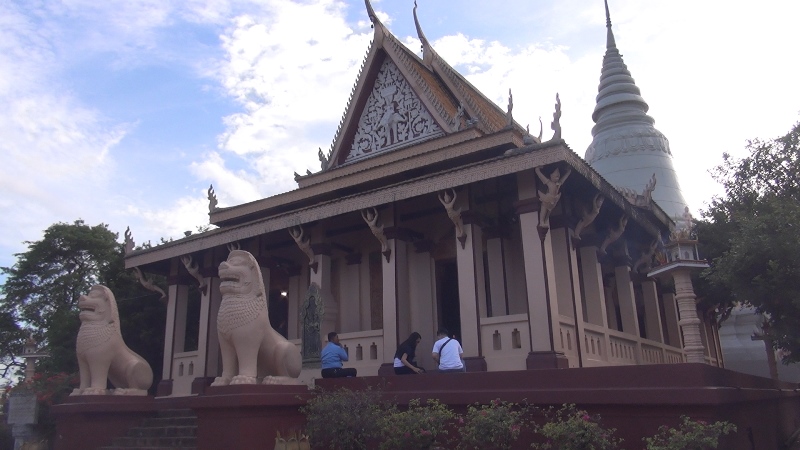
The Beginning of Phnom Penh
A folktale from Phnom Penh
A story about how the capital, Phnom Penh, got its name.

In the year 1372, on a hill east of a small mountain where four rivers meet, there lived a wealthy old woman named Penh. One year, when heavy rains made the river overflow, Lady Penh spotted a large koki tree floating near the shore, bobbing up and down in the water.
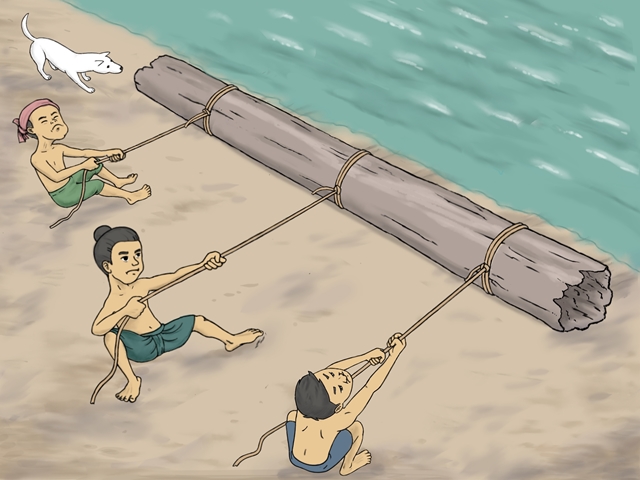
Lady Penh asked her neighbors for help. They gathered with ropes, tied them to the great tree, and little by little pulled it up onto the bank.
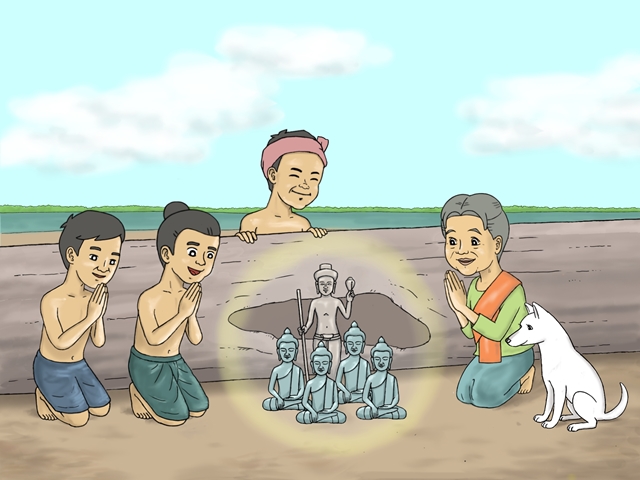
When they washed the mud off the tree, they found four bronze Buddha statues and one stone statue of a deity inside a hollow in the trunk. The deity stood holding a club and a conch shell, with his hair tied up.
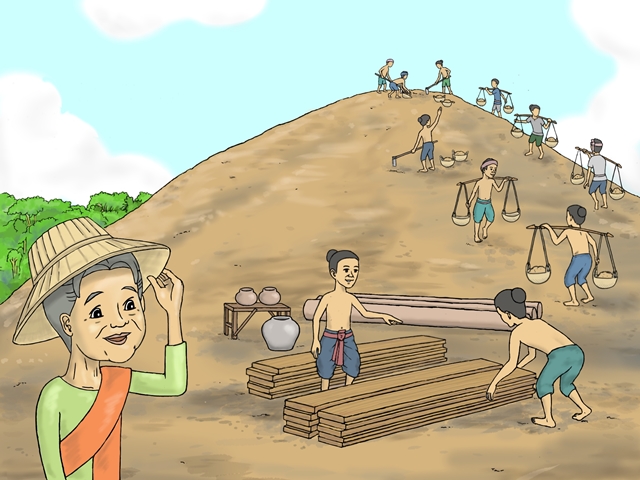
Working together with her neighbors, Lady Penh piled up earth to the west of her house to make a hill on which to build a shrine.
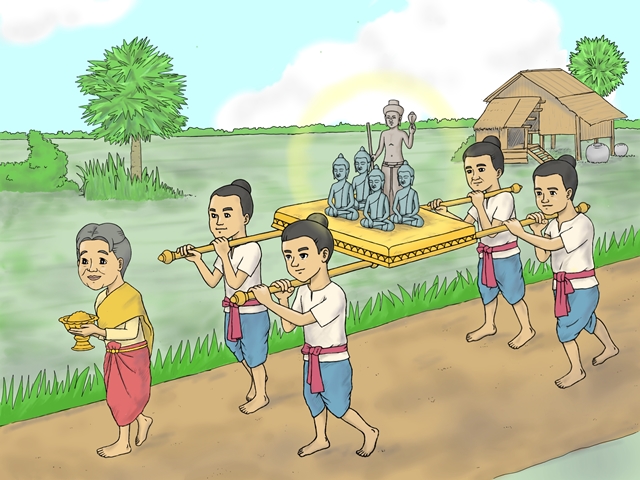
In 1372, Lady Penh and the people built a thatched shrine on top of the hill. They placed the four Buddha statues inside and enshrined the standing deity at the eastern foot of the hill. Because its style resembled that of Laos, Lady Penh believed it had drifted down from Laos, and she named it "Neak Ta Preah Chau."
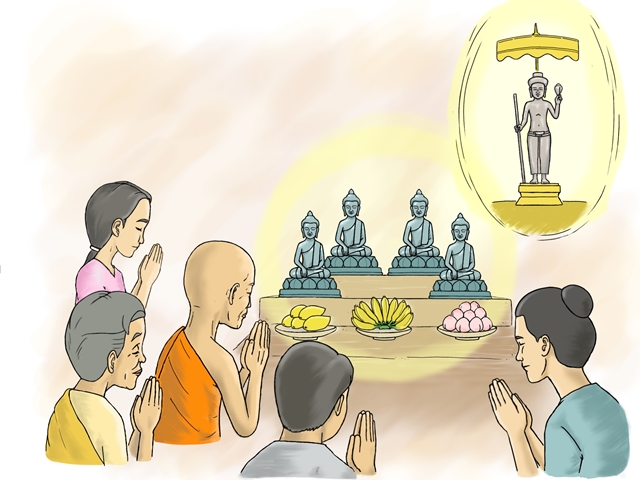
When the shrine was finished, Lady Penh invited monks to the western foot of the hill. From then on the temple was called "Wat Phnom Daun Penh" (the temple on Lady Penh's hill), and it is still known today by its short name, "Wat Phnom." The statues are believed to hold great spiritual power and to grant wishes.
This was the beginning of Phnom Penh. Within sixty years, this place had become the glorious capital of Cambodia.
The end.
Wat Phnom today
Wat Phnom as it stands today, on a small hill in the center of Phnom Penh.